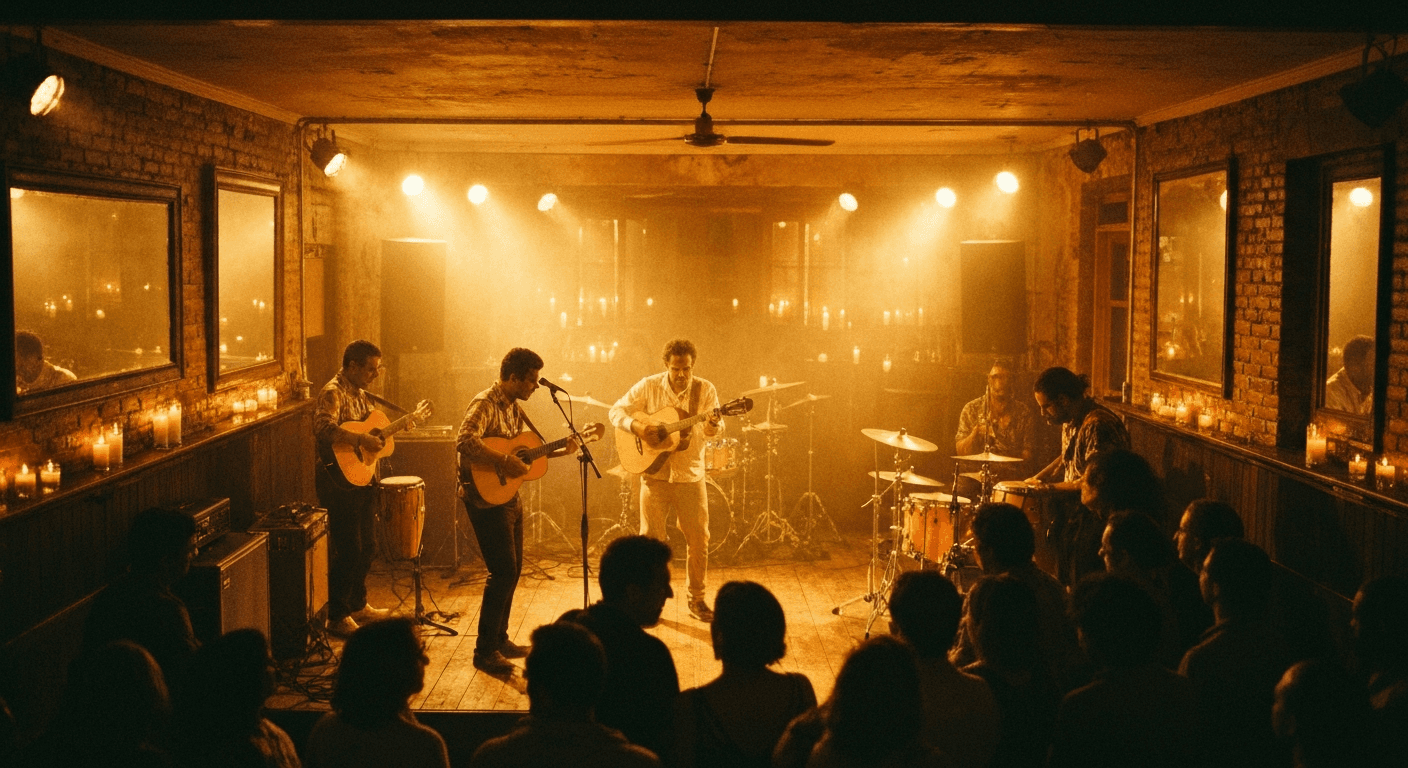
Few cities have shaped a country's entire musical identity the way Rio de Janeiro has. Samba took root here in the early 20th century, drawing from African rhythms brought by enslaved people, and the first recorded samba song, "Pelo Telefone," was cut in the city in 1916. A generation later, the Copacabana alleyway known as Beco das Garrafas became the incubator for bossa nova, where artists including Tom Jobim developed the samba-jazz hybrid that would reach audiences worldwide. That history is not merely archived; it plays out nightly across venues like Rio Scenarium in the Lapa district, the intimate bossa nova rooms at Beco das Garrafas itself, and Trapiche Gamboa in the historic Gamboa neighborhood, where samba and choro, an instrumental genre with roots in 19th-century Rio, remain living, practiced traditions rather than nostalgia acts.